How Agriturismo Connects Italian Farms and Guest Stays
Agriturismo background helps you tell a farm-based stay from a country hotel by showing how agricultural production shapes the lodging and its local identity.
What makes agriturismo different from a country hotel? Agriturismo background begins with a working agricultural enterprise: the stay is tied to a farm, not just to a rural view. That connection can shape the property’s identity, its food and the way guests encounter a particular place in Italy.
The idea does not describe one uniform kind of lodging. Italy’s farms differ in landscape, production, family circumstances and local requirements. To understand what a particular stay offers, it helps to look at how the farm’s agricultural purpose connects to its hospitality.
Agriturismo background
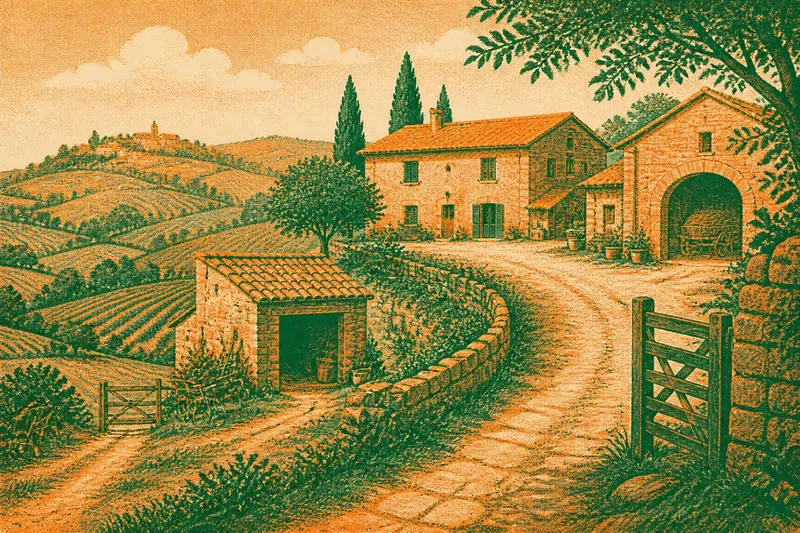
The agricultural enterprise is the starting point. Vineyards, olive groves, orchards, vegetable gardens, grain fields and livestock are among the activities that may shape a property. Hospitality is connected to that context rather than added as a countryside theme.
This relationship need not mean that guests take part in farm work. The connection may be visible in the landscape, the food or the way the property describes its agricultural activity. A farm-based stay can offer rest and lodging while cultivation remains the responsibility of the people who run the farm.
When comparing places, ask what the farm produces and how that activity relates to the stay.
Hospitality beside production
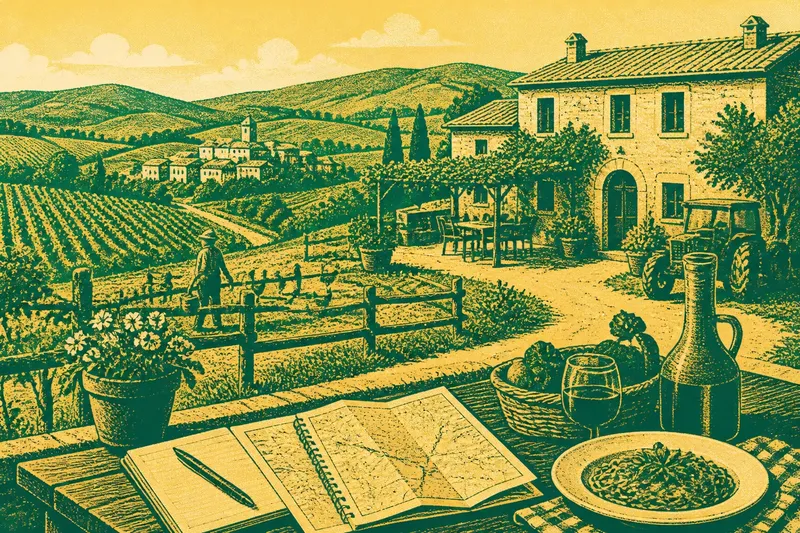
Farm hospitality combines receiving visitors with an agricultural livelihood. Guest rooms might be in a family home or an adapted outbuilding; the precise arrangement depends on the property and applicable local rules. The important distinction is not a particular building style, but the connection between hospitality and the farm.
Say you are considering an invented stay at an orchard farm in a hillside village. The listing says the owners grow fruit and have adapted an outbuilding for guests. You ask whether the orchard is part of the farm’s current activity and whether breakfast includes its produce when available. If the host explains how the orchard fits the property and answers plainly about the seasonal breakfast, you have a clearer basis for deciding whether the stay matches your interest. If those details remain vague, you can compare another property rather than assuming the orchard is more than scenery.
Local character varies
A vineyard, a grazing farm and a vegetable-growing property each have a different relationship to their surroundings. One stay might make its produce central to a meal; another might offer a view of cultivated land or an explanation of local growing practices. There is no single itinerary that defines every agriturismo.
That variety makes specific questions more useful than broad expectations. Ask what the farm produces, what guests can learn about it and which parts of the experience are actually offered. A clear answer helps distinguish a farm-based stay from lodging that simply happens to sit in the countryside.
Food and provenance
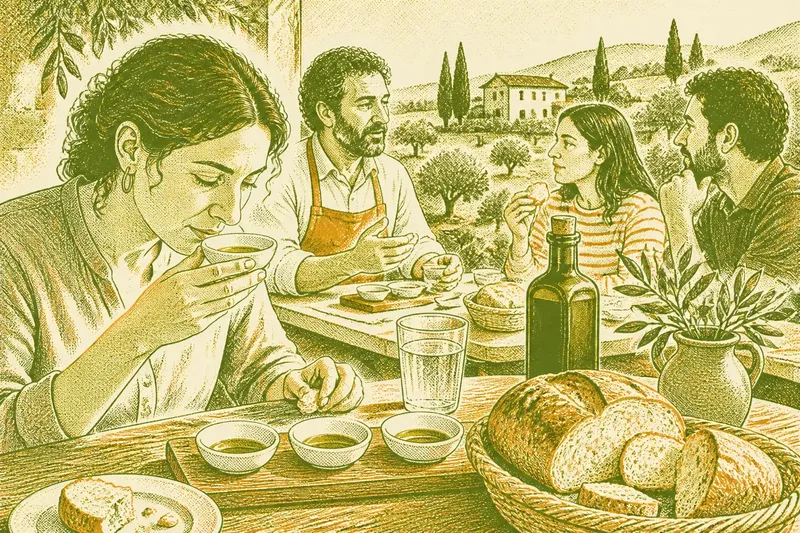
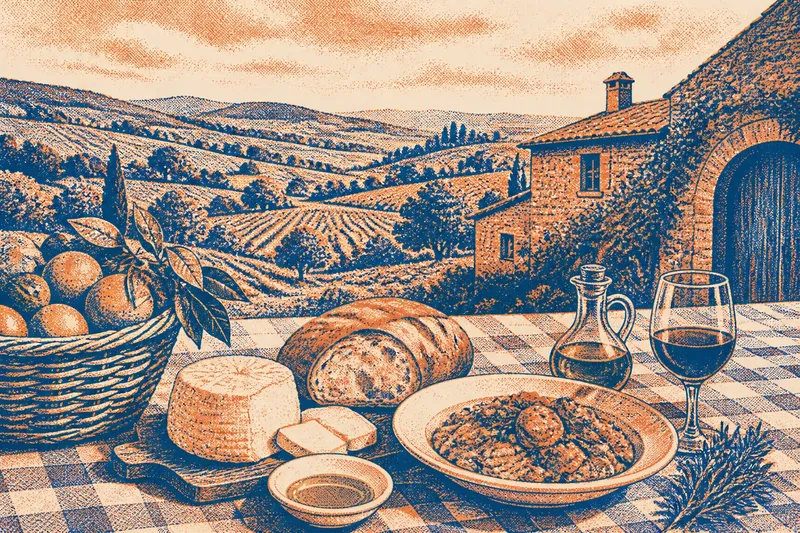
Meals can make a farm’s connection to place easier to understand. A host might serve products from the property, ingredients from neighboring producers or dishes associated with local foodways. These are related but distinct sources, and the word “local” does not necessarily mean “grown here.”
Seasonality also matters. What is available can change with the agricultural calendar, and a meal may draw on preserved foods or nearby suppliers as well as current produce. Asking where an ingredient comes from can clarify whether it is produced on the farm or part of the wider local food network.
Ask about provenance if the source of a meal matters to your choice.
Questions before booking?
Is agriturismo just a rural hotel?
No. Its defining connection is to an agricultural enterprise, although accommodations and services vary. A hotel in the countryside may have no farm activity of its own.
Do guests have to work on the farm?
No. Farm work is not an assumed guest duty, and participation should be treated as an activity only when the host explicitly offers it. You can ask what, if anything, is available before booking.
Does every stay serve food from its own farm?
No. A property may serve its own products, ingredients from nearby producers, or no meals. Ask how food is sourced if that connection is important to you.
Why do agriturismo stays differ?
Farms have different agricultural activities, settings and facilities, and local requirements can affect what they offer. Check the property’s description and ask the host about the specific services you need.
Choosing a fitting stay
Agriturismo background offers a useful way to judge whether a rural stay fits your interests: look for a clear connection between the farm’s agricultural activity and the guest experience. A meal, a description of a crop or the property’s setting may make that connection tangible, but no single feature applies to every farm.
Before booking, compare the farm’s stated activity with what the listing says guests can actually experience. That small distinction helps you choose with realistic expectations—and leaves room for each property to express its own relationship between agriculture and hospitality.