Olive Oil, Bread and the Order of a Tasting
Olive oil and bread tasting is easier to follow when the order fits the occasion, helping you notice aroma, bitterness and texture without specialist kit.
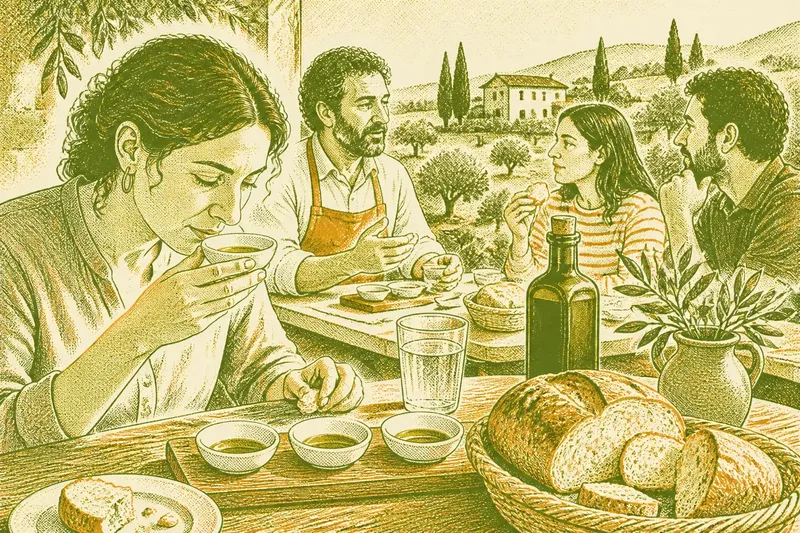
Should you taste olive oil and bread in a guided sequence, or simply pass a plate around the table? The right order depends on what you want from the moment: a clear comparison, a relaxed meal, or a little of both. In an agriturismo dining room, where oil may come from nearby groves and bread from the farm kitchen or village bakery, a few deliberate pauses can make ordinary ingredients easier to notice.
You do not need tasting glasses or formal vocabulary. A small dish, plain bread, water and attention are enough. The useful distinction is not between a correct and an incorrect ritual; it is between an order that helps people compare and one that lets conversation lead.
Choose by occasion
A guided tasting suits a table with several oils, or a group that wants to understand why they differ. Taste each oil in the same way, with bread held back until after an initial smell and sip. This gives aroma and texture room to register before bread introduces its own flavor and chew.
An informal table tasting fits a meal where the oil is there to be enjoyed, not examined. Put out one or two oils, offer bread, and let each person taste as they wish. A host can mention where an oil comes from or what dish it accompanies, then leave space for people to form their own impressions.
If the group includes both curious tasters and hungry diners, use a short guided opening, then serve the bread and let the table carry on naturally. The sequence supplies a point of comparison without turning lunch into a lesson.
- Choose a guided order when comparing oils, introducing unfamiliar flavors, or hosting guests who have asked how to taste.
- Choose an informal order when the oil is part of a shared meal and conversation matters more than comparison.
- Blend the two when you want a moment of attention without delaying the meal.
Decide first whether the table is gathering to compare, to eat, or to do a little of each.
Set a simple sequence
For a guided tasting, begin with the oil on its own. Pour a little into a small, clean dish or cup. Hold it near your nose and notice the first impression: fresh-cut grass, leafy herbs, green fruit, ripe fruit, or a quieter, softer scent. Those are descriptions, not grades. An oil need not resemble a particular aroma to be worth tasting.
Next, take a small sip and let the oil spread across the tongue. Notice whether it feels light or rounded, and whether a bitter flavor appears. After swallowing, pay attention to any peppery sensation at the back of the throat. These features can occur together, and their strength varies. There is no need to force a verdict from a single sip.
Only then add plain bread. Its mild flavor offers a familiar way to experience the oil as food: how it coats the crumb, whether the taste seems greener or mellower, and whether the bread’s own crust or sweetness changes the impression. Taste the bread by itself first if you want a clear sense of what it contributes.
When comparing more than one oil, keep the order consistent. Try the first oil on its own, then with bread; pause with water and a little plain bread before moving on. Repeat the same pattern for the next oil. If one is markedly stronger, leave it until later so its lingering flavor does not dominate a gentler one.
For an informal tasting, keep only the parts that feel useful. A quick smell before dipping bread may be enough. The purpose is to make the food more present, not to impose a ceremony on a meal.
Read oil and bread
Freshness is often easier to discuss through sensory details than through broad claims. An oil may smell lively and green, or rounder and softer; either can suit the food and the people at the table. Ask what you notice before asking whether you like it. That small change keeps description separate from judgment.
Bitter and peppery are common words in olive-oil tasting, but they do not mean the oil has gone bad. They describe sensations that may be more apparent in some oils than others. If a flavor seems unpleasant, consider whether the oil is stale, poorly stored, or simply not to your taste; do not infer quality from one sensation alone.
Bread also changes the experience. A mild loaf makes the oil easier to notice, while a sourdough’s tang, a dense crumb, or a deeply browned crust can compete for attention. For a comparison, use the same plain bread with each oil. At a meal, choose bread you genuinely want to eat, even if it is less neutral.
Say you have two oils at an agriturismo table: one smells leafy and leaves a clear peppery finish, while the other seems softer and more rounded. Taste each on its own, then with the same piece of plain bread. You may find the first stands out beside beans or grilled vegetables, while the second feels at home with the loaf; the point is to notice a preference, not to declare a winner.
Keep the table easy
Use small pours so guests can return for more without feeling obliged to finish a full serving. Set out separate dishes or cups for different oils, label them if names or origins matter to the group, and keep bread in a basket apart from the tasting portions. A plain glass of water helps clear the palate between samples.
Room conditions matter in modest ways. Strong cooking smells, perfume, and a crowded spread of flavored foods can make aromas harder to pick out. If you are hosting, give the oils a little space and begin before richly seasoned dishes arrive. There is no need to cool or warm them deliberately; serving them comfortably at the table is sufficient.
A useful prompt is concrete and open: “What do you notice after you swallow?” It invites a description without steering guests toward a preferred answer. If someone says only “good” or “not for me,” that is a complete response. Tasting is more welcoming when nobody has to perform expertise.
Which tasting order fits?
Should I taste oil before bread?
For a comparison, yes: smelling and tasting the oil first makes its own aroma and texture easier to notice. At a casual meal, you can simply dip bread and enjoy the combination.
How do I compare two olive oils?
Use the same small portion of plain bread and taste both oils in the same order: first alone, then with bread. Pause with water between them, and note a few plain-language impressions rather than trying to rank every quality.
What bread works best for tasting?
Plain bread with a mild flavor is useful when the oil itself is the focus. For an ordinary table tasting, a local loaf with a distinctive crust or crumb is perfectly suitable; it becomes part of the pairing rather than a neutral backdrop.
Do I need special tasting equipment?
No. A small clean dish or cup, bread, water and a place to jot down a few words will do. Specialist vessels may be used in formal settings, but they are not necessary for noticing differences over a meal.
Make room for both
A guided tasting order gives attention a shape: smell, taste the oil, try it with bread, then compare. An informal table tasting places pleasure and conversation first. Neither needs to replace the other, and a host can move from one mode to the next as the meal changes.
For olive oil and bread tasting, choose the lightest structure that serves the occasion. If guests want to compare, keep the sequence steady and the bread plain; if they have gathered to eat, let the oil travel around the table with the loaf. A few thoughtful observations can sharpen the pleasure of both without requiring specialist kit or a formal lesson.